



What Are the Best Motion-Preserving Alternatives to Spinal Fusion?
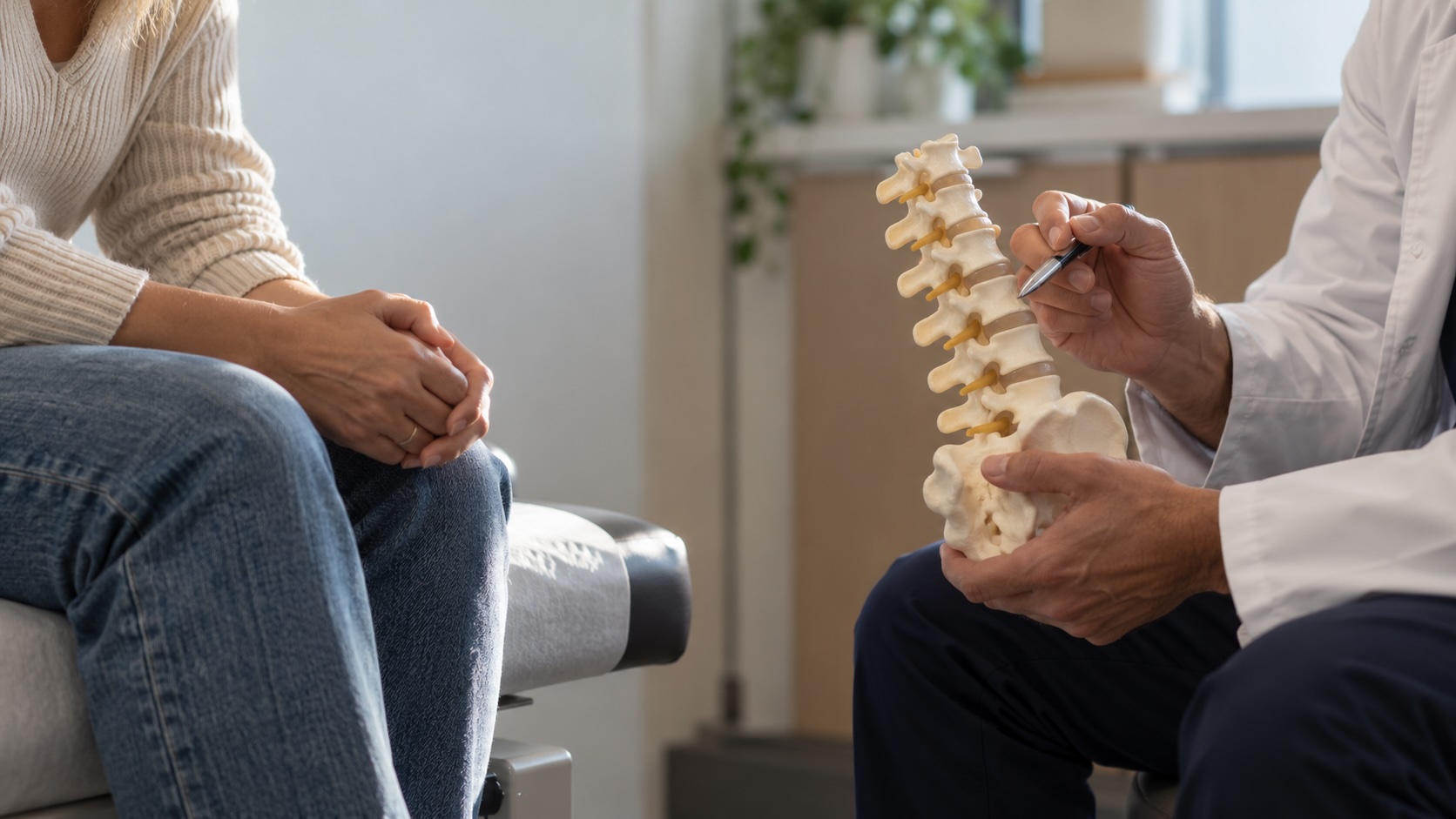
Being told you may need spinal fusion can raise a lot of questions. One of the biggest concerns patients have is whether they will lose movement in their neck or back after surgery.
Fortunately, spinal fusion is not always the only option. Advances in spine surgery have made it possible to treat certain conditions while preserving some or all of the natural movement at the affected spinal level.
Several motion-preserving alternatives to spinal fusion are now available, including endoscopic surgery, spinal decompression, artificial disc replacement, and the TOPS™ System. Newer technologies, such as 3Spine’s MOTUS lumbar joint replacement, are also being studied.
The best option depends on what is causing your symptoms, the condition of your spine, and whether stabilization is needed.
What Is Motion Preservation Spine Surgery?
Motion preservation spine surgery refers to procedures that treat spinal conditions without permanently joining vertebrae together.
Unlike spinal fusion, which eliminates movement at the treated level, motion-preserving procedures aim to maintain flexibility while addressing problems such as damaged discs, spinal stenosis, or nerve compression.
Some procedures preserve the spine’s existing structures. Others use artificial implants to replace damaged components while allowing continued movement.
5 Motion-Preserving Alternatives to Spinal Fusion
Not every patient needs the same type of surgery. Some conditions can be treated by simply relieving pressure on a nerve, while others require disc replacement or additional spinal support.
Here are five options worth understanding.
1. Endoscopic Spine Surgery
Endoscopic spine surgery is a minimally invasive approach that uses a small camera and specialized instruments to access and treat problems inside the spine.
Because the surgeon works through a small incision, much of the surrounding muscle and supporting tissue can remain intact.
Endoscopic techniques are commonly used to treat certain herniated discs and areas of nerve compression. For appropriately selected patients, the procedure can relieve symptoms without requiring spinal fusion.
However, endoscopic surgery is not suitable for every condition. Significant spinal instability or more complex structural problems may require another approach.
2. Spinal Decompression Surgery
Sometimes, the main problem is not a damaged disc but pressure on the spinal nerves.
Spinal decompression surgery creates more room for affected nerves by removing bone, thickened ligaments, or other tissue causing compression.
Common decompression procedures include:
- Laminectomy: Removes part or all of the lamina to create more space for compressed nerves.
- Laminotomy: Removes a smaller portion of the lamina to relieve pressure.
- Foraminotomy: Enlarges the opening where a spinal nerve exits the spine.
These procedures may be used for spinal stenosis, nerve compression, and certain conditions causing pain, numbness, or weakness in the arms or legs.
When the spine is stable, decompression alone may provide relief while maintaining movement at the treated level. If significant instability is present, additional stabilization may be necessary.
3. Artificial Disc Replacement (ADR)
Artificial disc replacement is one of the more established motion-preserving alternatives to spinal fusion. Instead of fusing the vertebrae, the surgeon replaces the damaged disc with an artificial implant designed to maintain movement.
The procedure may be an option for certain patients with cervical or lumbar degenerative disc disease, including cases involving disc herniation or nerve compression.
However, not everyone is a candidate. Severe facet joint arthritis, spinal instability, certain deformities, or poor bone quality may make disc replacement less appropriate. The decision depends on the overall condition of the spinal segment.
4. TOPS™ Motion Preservation System
The TOPS™ System is an FDA-approved motion-preserving implant designed for certain patients with lumbar spinal stenosis and Grade I degenerative spondylolisthesis.
Traditionally, spinal fusion has been used to address these conditions when both nerve decompression and stabilization are needed.
TOPS offers another option. After decompression surgery, the implant supports the treated segment while allowing controlled movement instead of permanently fusing the vertebrae.
Unlike artificial disc replacement, TOPS does not replace the disc. It provides support through an implant attached to the back of the spine, helping eligible patients maintain movement at the treated level.
5. 3Spine MOTUS Lumbar Joint Replacement
One of the more exciting developments in motion preservation is the MOTUS lumbar total joint replacement system from 3Spine.
Unlike traditional artificial disc replacement, MOTUS is designed to replace the function of both the disc and facet joints, helping restore stability while maintaining natural movement in the lower back.
This innovative approach could expand treatment options for patients with lumbar degeneration, spinal stenosis, and certain cases of spondylolisthesis who might otherwise require spinal fusion.
MOTUS is currently an investigational technology in the United States, with clinical research underway to evaluate its long-term outcomes. Early results are encouraging, making it a promising advancement in the future of motion-preserving spine surgery.
Which Motion-Preserving Procedure Is Right for You?
The best procedure depends on your spinal condition and how much support your spine needs.
For example, a herniated disc causing nerve compression may be treated with endoscopic surgery or decompression. Patients with significant disc degeneration may qualify for artificial disc replacement, while certain cases of lumbar stenosis with degenerative spondylolisthesis may benefit from TOPS.
Several factors influence the recommendation, including:
- The location and severity of spinal degeneration
- Whether nerve compression is present
- Spinal stability and alignment
- The condition of the discs and facet joints
- Bone quality and previous spine surgeries
Your symptoms, imaging, and response to previous treatments also help determine whether motion preservation is appropriate.
Is Motion Preservation Always Better Than Spinal Fusion?
Not necessarily. Preserving movement can be beneficial, but it is not the right goal for every spinal condition.
Spinal fusion remains an important treatment for patients with significant instability, certain deformities, severe degeneration, or other structural problems that require rigid stabilization.
In some cases, attempting to preserve movement could leave the underlying problem insufficiently treated.
The goal should be to choose the procedure that addresses the source of your symptoms while maintaining as much healthy spinal function as safely possible.
Explore Your Alternatives to Spinal Fusion
If you have been told you may need spinal fusion, it may be worth exploring whether a motion-preserving procedure is appropriate for your condition.
At Palm Beach Spine & Disc Replacement Center, Dr. Jason M. Cuéllar and his colleagues specialize in advanced spine care, with a strong emphasis on motion preservation and individualized treatment.
Schedule a consultation at our Palm Beach spine center to review your symptoms, discuss your imaging, and learn which surgical or non-surgical options may be right for you.